Ever wondered what separates thriving B2B companies from the rest? The answer often lies in mastering the concept of b2b prime—strategic excellence in business-to-business operations that drives unmatched growth and efficiency.
What Is B2B Prime and Why It Matters

The term b2b prime has emerged as a benchmark for high-performance business ecosystems where companies optimize their operations, relationships, and digital presence to dominate their niche. It’s not just about selling to other businesses—it’s about doing it smarter, faster, and with greater impact.

Defining the B2B Prime Concept
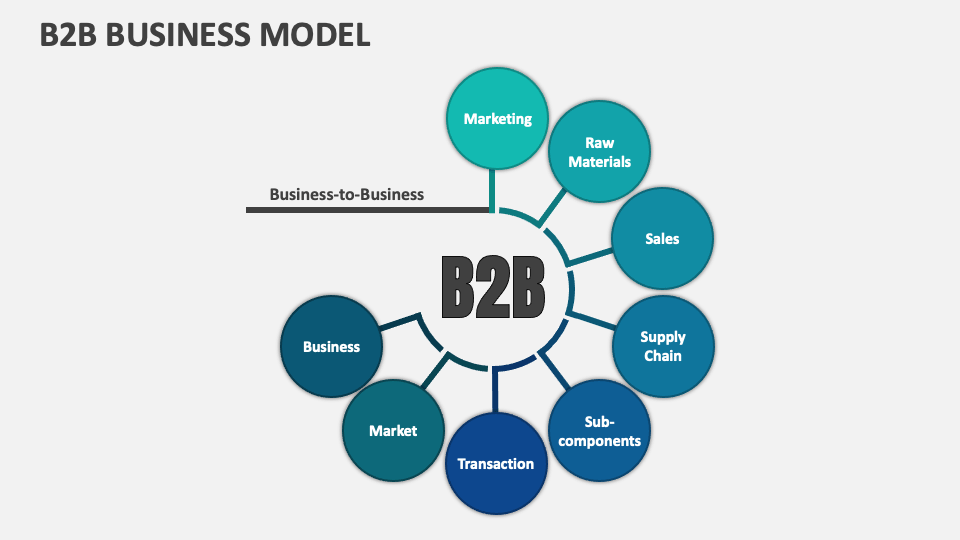
At its core, b2b prime refers to a state where a B2B company achieves peak operational efficiency, customer satisfaction, and market influence. This goes beyond traditional B2B models by integrating data-driven decision-making, advanced customer relationship management (CRM), and scalable digital infrastructure.
- It emphasizes long-term partnerships over transactional deals.
- It leverages automation and AI to streamline sales and support.
- It prioritizes trust, transparency, and value alignment between businesses.
According to McKinsey & Company, modern B2B buyers expect a consumer-like experience, making the shift toward b2b prime not just beneficial—but essential.
How B2B Prime Differs From Traditional B2B Models
Traditional B2B interactions often rely on manual processes, lengthy negotiations, and relationship-based sales. In contrast, b2b prime introduces a more systematic, technology-enabled approach.
- Speed: Faster onboarding and contract execution through digital platforms.
- Insight: Real-time analytics guide pricing, inventory, and customer engagement.
- Scalability: Cloud-based tools allow rapid expansion without proportional cost increases.
“The future of B2B isn’t just digital—it’s intelligent, predictive, and customer-centric. That’s what b2b prime represents.” — Gartner Research, 2023
The 7 Pillars of B2B Prime Success
Reaching b2b prime status isn’t accidental. It requires deliberate investment in seven foundational areas that collectively elevate a company’s market position, operational agility, and customer loyalty.
1. Data-Driven Decision Making
In a b2b prime environment, decisions are no longer based on intuition or legacy practices. Instead, they’re grounded in real-time data from sales pipelines, customer behavior, and supply chain performance.
- Use predictive analytics to forecast demand and manage inventory.
- Implement dashboards that track KPIs like customer acquisition cost (CAC) and lifetime value (LTV).
- Leverage AI-powered tools such as Salesforce Sales Cloud to automate lead scoring and follow-ups.
Companies using advanced analytics report up to 5% higher profit margins than peers, according to a Harvard Business Review study.
2. Customer-Centric Experience Design
B2B buyers today expect seamless, personalized experiences similar to B2C platforms. A b2b prime strategy places the customer at the center of every touchpoint.
- Develop self-service portals for order tracking, invoicing, and support.
- Use chatbots and knowledge bases to reduce response times.
- Personalize content and offers based on buyer personas and past interactions.
For example, IBM’s Institute for Business Value found that 75% of B2B buyers are more likely to purchase from vendors offering a personalized digital experience.
3. Strategic Partner Ecosystems
No company operates in isolation. B2B prime organizations build robust partner networks that enhance service delivery, expand market reach, and co-innovate solutions.
- Integrate with complementary SaaS platforms (e.g., ERP, CRM, logistics).
- Create referral and co-marketing programs with aligned vendors.
- Establish clear SLAs and performance metrics for partners.
Take Microsoft’s Partner Network as a model—over 400,000 partners globally help deliver integrated solutions, amplifying Microsoft’s b2b prime positioning.
B2B Prime and Digital Transformation
Digital transformation is not a one-time project—it’s an ongoing evolution. For companies aiming for b2b prime excellence, digital maturity is non-negotiable.
Cloud Infrastructure as a Foundation
Legacy systems hinder agility. B2B prime companies migrate to cloud platforms that offer scalability, security, and integration capabilities.
- Adopt multi-cloud or hybrid models for flexibility.
- Use cloud-based collaboration tools like Microsoft Teams or Slack for internal and client communication.
- Ensure compliance with data protection regulations (e.g., GDPR, CCPA).
According to IDC, 60% of global enterprises will rely on cloud-native platforms by 2025 to accelerate digital initiatives.
Automation and AI Integration
Manual processes are the enemy of efficiency. B2B prime organizations deploy automation across sales, marketing, finance, and customer service.
- Use marketing automation tools like HubSpot or Marketo for lead nurturing.
- Implement robotic process automation (RPA) for invoice processing and data entry.
- Deploy AI-driven insights for churn prediction and upsell opportunities.
A PwC report estimates that AI could contribute up to $15.7 trillion to the global economy by 2030, with B2B sectors leading adoption.
Measuring B2B Prime Performance
What gets measured gets managed. To sustain b2b prime status, companies must track key performance indicators (KPIs) that reflect both operational health and customer satisfaction.
Essential KPIs for B2B Prime Companies
Tracking the right metrics allows businesses to identify bottlenecks, celebrate wins, and refine strategies.
- Customer Retention Rate (CRR): Measures loyalty and satisfaction over time.
- Net Promoter Score (NPS): Gauges how likely clients are to recommend your services.
- Deal Velocity: Tracks the average time from lead to close.
- Revenue per Employee: Indicates operational efficiency and scalability.
For instance, a high NPS (above 50) often correlates with strong b2b prime characteristics, as seen in companies like Adobe and Shopify.
Benchmarking Against Industry Leaders
Comparing your performance to industry benchmarks helps contextualize your progress.
- Use platforms like Gartner Peer Insights or Forrester Wave to evaluate your tech stack and service quality.
- Participate in third-party audits or certifications (e.g., ISO, SOC 2) to validate excellence.
- Conduct regular competitive analysis to stay ahead of market shifts.
Benchmarking isn’t about copying—it’s about learning, adapting, and innovating to maintain b2b prime leadership.
B2B Prime in Action: Real-World Case Studies
Theory is valuable, but real-world examples bring the concept of b2b prime to life. Let’s explore how leading companies have achieved this status through innovation and execution.
Case Study 1: Salesforce – The CRM Powerhouse
Salesforce didn’t just create a product—they redefined B2B software delivery. By focusing on cloud-based CRM, ecosystem integration, and customer success, they became synonymous with b2b prime.
- Launched Trailhead, a free learning platform, to empower users.
- Built AppExchange, a marketplace with over 5,000 integrations.
- Invested heavily in AI with Einstein Analytics.
Result: Over $30 billion in annual revenue and a 20% market share in CRM, according to Statista.
Case Study 2: Siemens – Industrial Digitalization Leader
Siemens transformed from an industrial manufacturer into a digital solutions provider, embodying b2b prime in the manufacturing sector.
- Developed MindSphere, an industrial IoT platform.
- Integrated AI into predictive maintenance for clients.
- Partnered with AWS and Microsoft Azure for scalable cloud services.
Outcome: A 30% increase in service revenue and improved customer retention across energy, healthcare, and transportation sectors.
Challenges on the Path to B2B Prime
While the rewards are significant, the journey to b2b prime is not without obstacles. Companies must navigate internal resistance, technological complexity, and evolving customer expectations.
Overcoming Organizational Resistance
Change is hard, especially in established B2B firms with legacy systems and cultures.
- Start with pilot programs to demonstrate ROI.
- Engage leadership early to secure buy-in.
- Invest in change management training and internal communication.
As Prosci research shows, projects with strong change management are six times more likely to meet objectives.
Data Silos and Integration Issues
One of the biggest technical barriers to b2b prime is fragmented data across departments.
- Implement a centralized data warehouse or data lake.
- Use APIs to connect CRM, ERP, and marketing platforms.
- Adopt master data management (MDM) practices for consistency.
Without integration, even the best tools can’t deliver b2b prime outcomes.
Future Trends Shaping B2B Prime
The definition of b2b prime will continue to evolve. Staying ahead requires anticipating trends and adapting proactively.
Rise of AI-Powered Sales Assistants
AI is moving beyond analytics into active sales support.
- Virtual sales reps can schedule meetings, answer FAQs, and qualify leads.
- Natural language processing (NLP) enables real-time call analysis and coaching.
- Predictive lead scoring improves conversion rates by 30–50%.
Tools like Chorus.ai and Gong are already transforming sales teams into b2b prime performers.
Sustainability as a Competitive Advantage
Modern B2B buyers prioritize sustainability. Companies with strong ESG (Environmental, Social, Governance) practices gain trust and preference.
- Offer carbon-neutral shipping or energy-efficient products.
- Report sustainability metrics transparently.
- Partner with green-certified suppliers.
A Deloitte survey found that 75% of B2B decision-makers consider sustainability when choosing vendors.
How to Start Your B2B Prime Journey
Transitioning to b2b prime doesn’t require a complete overhaul overnight. It begins with strategic steps that build momentum over time.
Conduct a B2B Prime Readiness Assessment
Before investing in new tools or processes, evaluate your current state.
- Assess digital maturity across sales, marketing, and operations.
- Survey customers for feedback on experience and satisfaction.
- Audit your technology stack for integration gaps.
Use frameworks like the Digital Maturity Model to score your organization.
Build a Cross-Functional B2B Prime Team
Success requires collaboration across departments.
- Include reps from sales, IT, customer success, and finance.
- Assign a b2b prime champion or program manager.
- Set quarterly goals and review progress transparently.
This team becomes the engine of transformation, ensuring alignment and accountability.
What is b2b prime?
B2B prime refers to a high-performance state in business-to-business operations characterized by data-driven decision-making, customer-centric design, digital maturity, and strategic partnerships that drive growth and efficiency.
How can a company achieve b2b prime status?
A company can achieve b2b prime status by investing in digital infrastructure, automating key processes, building strong partner ecosystems, prioritizing customer experience, and continuously measuring performance against industry benchmarks.
Is b2b prime only for large enterprises?
No, b2b prime principles can be applied by companies of all sizes. Small and mid-sized businesses can leverage cloud tools, AI, and strategic partnerships to achieve b2b prime efficiency and competitiveness.
What role does AI play in b2b prime?
AI enhances b2b prime by enabling predictive analytics, automating repetitive tasks, personalizing customer interactions, and providing real-time insights that improve decision-making and operational speed.
Are there risks in pursuing b2b prime?
Risks include high initial investment, organizational resistance to change, data security concerns, and over-reliance on technology. These can be mitigated with strong change management, cybersecurity protocols, and phased implementation.
Reaching b2b prime is not a destination—it’s a continuous journey of improvement, innovation, and customer focus. By embracing digital transformation, leveraging data, and building resilient ecosystems, businesses can unlock sustainable growth and market leadership. The future of B2B belongs to those who act now to become prime players in their industries.
Further Reading: